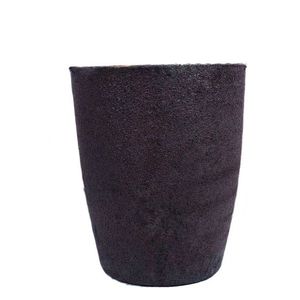
In the world of high-temperature production, where steels thaw like water and crystals expand in intense crucibles, one device stands as an unrecognized guardian of pureness and precision: the Silicon Carbide Crucible. This simple ceramic vessel, forged from silicon and carbon, flourishes where others stop working– long-lasting temperatures over 1,600 levels Celsius, withstanding liquified steels, and keeping delicate materials excellent. From semiconductor labs to aerospace factories, the Silicon Carbide Crucible is the silent partner enabling innovations in whatever from integrated circuits to rocket engines. This write-up explores its clinical secrets, workmanship, and transformative role in innovative porcelains and past.
1. The Science Behind Silicon Carbide Crucible’s Strength

(Silicon Carbide Crucibles)
To understand why the Silicon Carbide Crucible dominates extreme atmospheres, photo a microscopic citadel. Its framework is a latticework of silicon and carbon atoms bound by strong covalent links, forming a material harder than steel and virtually as heat-resistant as diamond. This atomic plan offers it three superpowers: an overpriced melting point (around 2,730 degrees Celsius), reduced thermal development (so it doesn’t break when heated), and excellent thermal conductivity (spreading warmth equally to stop hot spots).
Unlike metal crucibles, which wear away in molten alloys, Silicon Carbide Crucibles fend off chemical strikes. Molten light weight aluminum, titanium, or uncommon planet steels can not penetrate its dense surface, many thanks to a passivating layer that develops when subjected to warm. Much more outstanding is its stability in vacuum or inert ambiences– crucial for growing pure semiconductor crystals, where even trace oxygen can wreck the final product. In other words, the Silicon Carbide Crucible is a master of extremes, balancing toughness, heat resistance, and chemical indifference like nothing else material.
2. Crafting Silicon Carbide Crucible: From Powder to Precision Vessel
Creating a Silicon Carbide Crucible is a ballet of chemistry and engineering. It begins with ultra-pure resources: silicon carbide powder (commonly manufactured from silica sand and carbon) and sintering aids like boron or carbon black. These are mixed right into a slurry, formed into crucible molds using isostatic pushing (using uniform pressure from all sides) or slide spreading (pouring fluid slurry into porous molds), then dried out to eliminate moisture.
The real magic occurs in the heating system. Using hot pressing or pressureless sintering, the shaped eco-friendly body is heated to 2,000– 2,200 levels Celsius. Here, silicon and carbon atoms fuse, getting rid of pores and densifying the structure. Advanced methods like response bonding take it even more: silicon powder is packed right into a carbon mold, then warmed– fluid silicon responds with carbon to create Silicon Carbide Crucible wall surfaces, leading to near-net-shape components with minimal machining.
Completing touches issue. Edges are rounded to stop stress and anxiety fractures, surface areas are polished to decrease friction for easy handling, and some are covered with nitrides or oxides to enhance rust resistance. Each step is kept an eye on with X-rays and ultrasonic tests to ensure no surprise imperfections– because in high-stakes applications, a tiny crack can indicate disaster.
3. Where Silicon Carbide Crucible Drives Development
The Silicon Carbide Crucible’s ability to take care of warm and purity has actually made it important throughout cutting-edge markets. In semiconductor manufacturing, it’s the best vessel for expanding single-crystal silicon ingots. As liquified silicon cools down in the crucible, it forms flawless crystals that come to be the structure of integrated circuits– without the crucible’s contamination-free atmosphere, transistors would stop working. Similarly, it’s used to expand gallium nitride or silicon carbide crystals for LEDs and power electronic devices, where also small contaminations weaken efficiency.
Steel handling relies upon it too. Aerospace foundries make use of Silicon Carbide Crucibles to thaw superalloys for jet engine wind turbine blades, which must endure 1,700-degree Celsius exhaust gases. The crucible’s resistance to erosion makes certain the alloy’s make-up stays pure, generating blades that last much longer. In renewable resource, it holds molten salts for concentrated solar power plants, enduring daily home heating and cooling down cycles without breaking.
Even art and study advantage. Glassmakers utilize it to melt specialty glasses, jewelers rely on it for casting rare-earth elements, and laboratories employ it in high-temperature experiments studying product behavior. Each application hinges on the crucible’s special mix of sturdiness and accuracy– confirming that sometimes, the container is as crucial as the contents.
4. Developments Elevating Silicon Carbide Crucible Efficiency
As needs expand, so do advancements in Silicon Carbide Crucible design. One breakthrough is gradient frameworks: crucibles with varying thickness, thicker at the base to manage molten metal weight and thinner on top to decrease heat loss. This maximizes both toughness and energy effectiveness. An additional is nano-engineered finishes– slim layers of boron nitride or hafnium carbide put on the interior, enhancing resistance to aggressive melts like molten uranium or titanium aluminides.
Additive production is additionally making waves. 3D-printed Silicon Carbide Crucibles permit complicated geometries, like internal networks for cooling, which were impossible with typical molding. This reduces thermal anxiety and prolongs lifespan. For sustainability, recycled Silicon Carbide Crucible scraps are currently being reground and reused, reducing waste in production.
Smart surveillance is emerging too. Embedded sensing units track temperature level and structural stability in actual time, signaling customers to potential failings before they occur. In semiconductor fabs, this means much less downtime and greater returns. These developments make certain the Silicon Carbide Crucible remains ahead of progressing requirements, from quantum computer products to hypersonic automobile elements.
5. Selecting the Right Silicon Carbide Crucible for Your Process
Choosing a Silicon Carbide Crucible isn’t one-size-fits-all– it relies on your details obstacle. Pureness is critical: for semiconductor crystal development, select crucibles with 99.5% silicon carbide web content and very little complimentary silicon, which can contaminate melts. For steel melting, prioritize density (over 3.1 grams per cubic centimeter) to withstand erosion.
Size and shape issue also. Conical crucibles alleviate putting, while superficial layouts advertise also warming. If dealing with harsh melts, choose coated versions with boosted chemical resistance. Distributor competence is essential– try to find manufacturers with experience in your market, as they can customize crucibles to your temperature variety, melt type, and cycle frequency.
Expense vs. lifespan is an additional consideration. While premium crucibles cost much more ahead of time, their capability to hold up against hundreds of melts minimizes replacement frequency, saving money long-term. Constantly request examples and check them in your procedure– real-world performance defeats specs theoretically. By matching the crucible to the job, you unlock its full possibility as a trusted companion in high-temperature job.
Verdict
The Silicon Carbide Crucible is more than a container– it’s a portal to understanding extreme heat. Its trip from powder to precision vessel mirrors humankind’s mission to push limits, whether expanding the crystals that power our phones or melting the alloys that fly us to room. As innovation advances, its function will only expand, allowing technologies we can not yet picture. For sectors where purity, longevity, and accuracy are non-negotiable, the Silicon Carbide Crucible isn’t just a tool; it’s the structure of progress.
Provider
Advanced Ceramics founded on October 17, 2012, is a high-tech enterprise committed to the research and development, production, processing, sales and technical services of ceramic relative materials and products. Our products includes but not limited to Boron Carbide Ceramic Products, Boron Nitride Ceramic Products, Silicon Carbide Ceramic Products, Silicon Nitride Ceramic Products, Zirconium Dioxide Ceramic Products, etc. If you are interested, please feel free to contact us.
Tags: Silicon Carbide Crucibles, Silicon Carbide Ceramic, Silicon Carbide Ceramic Crucibles
All articles and pictures are from the Internet. If there are any copyright issues, please contact us in time to delete.
Inquiry us